This is just the begining. Check back each month for more "Da Vinci Code Secret Archives" facts: Da Vinci Code movie
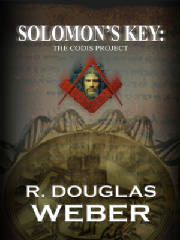
trialer link,codes, ambigrams, and strange facts ... coming soon info on The Solomon Key Last
Update April,2006
I toured these sites during my tenure with the U.S. Dept. of State. As a guest of MI-5 and another visting dignitary.
Having had the oppoutunity to visit London in person, I advise you see these and many more historical locales: The Tower of
London, Sherlock's Pub (have a piece of Shepherd's Pie and a pint of bitter ale with Holmes for me!) Remember to keep looking
over your shoulder; you maybe be followed in your quest!
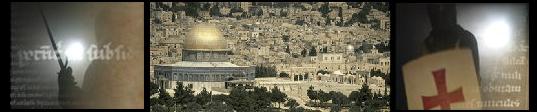
The Rosey Cross of the Templars and many secret
societies. The unification of the rose and the upright cross symbolize the union of male and female.
If you want a more indepth explanation may I suggest Robert Anton Wilson's "THE COSMIC TRIGGER." Brown alluded
to the secret of the Templars and the Illuminati in his book. Remember the ritual that Sophie observed and which upset
her so?
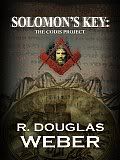
My novel also explains the secret rituals and traditions of the Paris occultists. While still shocking for some
to this day, at least you won't be burned at the stake!
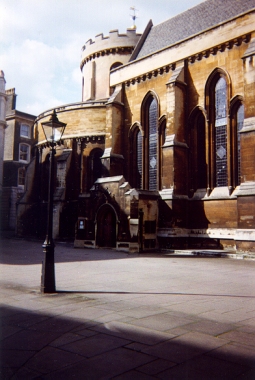
Exterior shot Temple Church London ...
scence of the betrayel and misdirection ....
YOU ARE ENTERING THE BLACKWORKS
Proceed and play secret agent on your own mission!
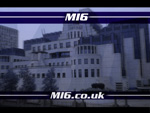
Headquarters of the real MI-6 Her Majesties Secret
Service ... James Bond's home base. Link to all things Bond.
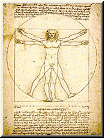
I was convinced that Leonardo da Vinci had carried out
similar experiments to my own, and was of course pleased to find evidence of it. Over the years I have found seven passages
in his surviving written works that mention rays of vision and say that only the central rays are strong and true, while those
surrounding weak (debole) and deceitful (bugiarde).
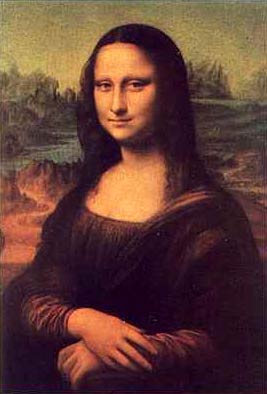
Studying the Mona Lisa painting, I could see how the soft shadows of the cheeks lead our focus and moveable attention to the
left eye, and how the shadow of that eye leads them right inside it, a clear and delicate point of contrast pleasing to our
moveable attention. And why does the Mona Lisa have no eyebrows? This may have been the current fashion, but it may also have
been one that pleased Leonardo, as lack of eyebrows lays more emphasis on the eyes. Leonardo made very sure, in all ways,
that we would look into the eyes of the Mona Lisa, and doing so be rewarded by a loving smile.
When the eye of a woman is given so much importance, it
must have special significance. What if the Mona Lisa is not only a lively and accurate portrait of a Florentine beauty, but
also an allegorical embodiment of seeing? This woman is looking at us, and we are looking at her. She is looking and being
looked at, thus seeing both in the active and passive form. We see with our eyes, and for this we need light. Her eyes occupy
the center of the upper part of the painting, while the brightest part of the painting area, namely the shine on her breast,
lies just above the very center of the painting. The dark green-brown hem of her garment may bee seen as the horizon, while
the bright shining spot may represent the rising sun, and the lines of the veil thrown over her left shoulder would symbolize
the trajectories of the sun traveling over the sky. We see the Mona Lisa sitting in a dark room, close to the bright opening
of a small balcony. If the lateral columns were still there, we would have the strong impression that it were a window. We
stay inside the dark chamber, looking out: the chamber may well symbolize the chamber of the eye. If so, the opening of the
balcony would represent kind of a pupil (square instead of round). The windows are to the house what the eyes are to the body.
Inside the virtual eye, the Mona Lisa would occupy the so-called natural point hailed by Leonardo: namely that wonderful interface
of the eye where all rays of light received from seen objects meet and join at one single point. The woman is turning towards
us from the picture plane. Her legs are parallel to the balcony, but the upper part of her body is rotating in our direction,
her face first: but her eyes have already reached us, and gaze straight out of the picture at the viewer, joining the plane
of vision with the direction of view. Her upper part body forms a kind of circle, and her head forms a second, smaller one
around her left eye in the center of the upper part of the painting.
To the left and right of the woman mountains, lakes and
river valleys can be seen. They form an almost prehistoric landscape which, in its dreamlike breadth, may symbolize nature
itself. It has well been noted that in the painting we are looking down upon the left lake, but are on the same level as the
right one. You will recall the two perspectives that we found in the Last Supper. Here we have another pair of perspectives,
and they communicate to us the same thing: that we can never really understand the world and life by looking at it from just
one point of view. Leonardo himself concurred with the antique understanding of the living being as a tiny cosmos. The Mona
Lisa, by representing the natural point in the eye, may refer to the ancient belief of microcosm within macrocosm (this belief
may appear strange belief, but the modern theory of fractal geometry teaches us that the same forms may appear on the highest
and deepest level of structures). In the picture we have nature; a living being; and artificial objects: a veil, a dress,
a stool, a balcony, a house, roads, a bridge. The woman is depicted in obvious balance with the nature surrounding her, while
the artificial objects occupy a modest place and accompany and suit her; they also form a kind of artificial pupil (window)
in an artificial body (house). All of this may be a symbol of art as the harmony of the artificial world with life and nature.
And yet the house lifts the Mona Lisa high above nature: it hovers above the landscape in the background, much as would a
balloon. This may symbolize that our artificial trappings lift us higher than the lives and necessities of common animals.
In a mysterious and frequently mistranslated passage, Leonardo wrote that humans are distinguished from the animals by our
use of tools. In one of his drawings he depicted objects falling to Earth. Above he wrote: Adam here, Eve there; and below: Oh human misery; of how many things you
make yourself the slave for money. In other passages of his writings he praised the human eye. It would not be too difficult
to find a quote for every element of my above interpretation.
May I also mention that Leonardos writings are full of
geometrical sketches? He considered his art to be a science, and said that no science can do without mathematics. Furthermore
he praised proportions, and compared his way of putting together a picture with that of composing a piece of music: e se ti dicessi la musica essere composta di proporzione, o io con questa medesima seguito la pittura and if you
say that music consists of proportions, I as a painter also use that means (namely proportions).
Take me, thus, take a look at the underlying geometry
of the Mona Lisa painting. If the columns on the sides of the balcony were still there, the inside format would be 4:3, a
much-used proportion during the Italian Renaissance. The unit is given by the breadth of the womans head on the height of
the small fold in her hair veil (nearly on the level of her eyes). Move one unit to the left and one to the right of her head
and you obtain the original width, while the height measures 4 units. The left line of the balcony sill divides the height
4 units in the ratio 2:3 (or into 1.6 and 2.4 units). Draw two arcs of the radius 4 units around the lower corners of the
inside format. Now draw a circle, whose radius should measure 1,5 units, around the center of the inside format. It will seize
the edge of Mona Lisas hair. Draw another pair of arcs with a radius 4 units around the upper corners of the inside format.
The four arcs will touch the circle in four points: the very points where the two diagonals of the inside format 4:3 cross
the circle. These four points are very important in the geometry of this composition. Their horizontal distances measure 1.8
units, their vertical distances 2.4 units, and their oblique distances 3 units. Now imagine circles around all four points.
Their radii shall measure 0.1 / 0.2 / 0.3 / 0.4 / 0.5 / 0.6 / 0.7 / 0.8 / 0.9 / 1 / 1.1 / 1.2 / 1.3 / 1.4 / 1.5 / 1.6 / 1.7
/ 1.8 / 1.9 / 2 / 2.1 / 2.2 / 2.3 / 2.4 units. Apply the circles as very fine and precise grooves on a transparency and place
this over a reproduction. If seen from below and from the sides the circles joining into S-lines. Two vertical lines follow
the cheeks of the woman, cross on her breast and follow the upper arms, while a horizontal S-line explains the shifting of
the landscape. It is all as if the figure of the woman were created by the circles; as if Leonardo, who had carefully studied
all motions of the water, had anticipated the wave-nature of light and matter! Moreover, four circles meet at the point where
the parting in her hair begins: a very close double point on the height 3.5 units (half a unit below the upper edge of the
inside format). The left radii measure 0.8 and 2.8 units, the right ones 1.1 and 2.9 units, while the horizontal distance
of the two very close points measures 1.8 minus the square root of 0.55 minus the square root of 1.12 = 0.00007962 units.
The numbers are based on the equations 55 = 8x8 3x3 = 28x28 27x27 and 112 = 11x11 3x3 = 29x29 27x27. The very small distance
marked by the double point may, once again, symbolize the two mental perspectives of our human life: coming very close but
never really meeting.
May I plead for the reconstruction of the original inside
format 4:3? One might simply add a pair of narrow panels and color them according to the sky, the columns and the balcony.
A new frame should have a strength of one unit and measure 6 by 5 units (inside measurements 4 by 3 units). Paintings by Leonardo,
Raphael and others gain much when displayed in their original formats. Leonardos Last Supper is a ruin of a painting, in that
it has lost much of its original color. However, its composition has survived undamaged and still has a strong effect on its
viewers.
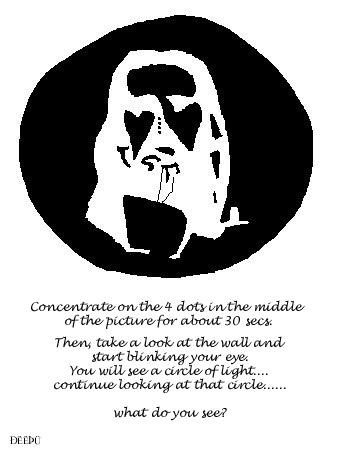
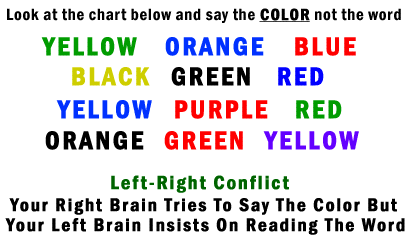
Say the color not the word! Bet you can't ... click on image for link to more illusions ...
Poussin's Enigmatic Painting
According to Gerard de Sede, L'Or de Rennes-le-Château, the enigmatic reference to "shepherdess
no temptation that Poussin Teniers hold the key" in the second parchment refers to the the works of Nicolas Poussin (1593-1665)
and David Teniers the Younger (1610-1694), who had painted The Temptation of St Antony.
Poussin reportedly travelled to Paris to verify his discovery and while there visited the Louvre to
obtain copies of Poussin's Les Bergers D'Arcadie, Tenier's The Temptation of St Antony and a third painting,
a portrait of Pope Celestine V, artist unknown.
"There is a famous painting by Poussin entitled Les Bergers D'Arcadie (the Arcadian shepherds)
which shows them around a tomb containing the mysterious inscription 'Et in Arcadia Ego...'" "This tomb appears to be
a virtual replica of one not too dissimilar to it right outside of Rennes-le-Château. Saunière 's church indeed contains a
'daemon guardian' which is a representation of the Biblical Asmodeus, who helped Solomon build his Temple; and some say the
rays of the sun at midday passing through the glass create an optical effect they call 'blue apples'." -
Steve Mizrach, "The Mysteries of Rennes-le-Château and the Prieure du Sion"
Th phrase "Et in Arcadia Ego" translated into English has been interpreted to mean "Even in earthly
paradise, I (death) exist."
Click here to jump to Superheroines in Action ...
a little mind candy ... don't you deserve a treat?
<META NAME="TITLE" CONTENT="ANGELS AND DEMONS MOVIE TRAILER,Da Vinci Code Photos Secret Archives,
davici code history,davinci code locales,the Judas Gospel">
<META NAME="DESCRIPTION" CONTENT="Photos and facts from the Da Vinci Code, Rosslyn Chapel,the
Judas Gospel,Holy Blood Holy Grail,Templar treasure davinci code secret archives,codebreaker challege,the solomon key">
<META NAME="KEYWORDS" CONTENT="ANGELS AND DEMONS MOVIE TRAILER,The Da Vinci Code,davinci
code photos,the solomon key,Knights Templar treasure,St.Sulpice Paris,Templar code,Mysteries of Rennes-le-Château,the Prieure
du Sion,Atbash Cipher,knights templar,rosslyn chapel,secret codes,davinci code mystery,codebreaker test davinci code, codebreaker
challenge davinci code,dan brown the solomon key">
<META NAME="OWNER" CONTENT="20052@msn.com">
<META NAME="AUTHOR" CONTENT="rdw">
<META HTTP-EQUIV="EXPIRES" CONTENT="Mon, 31 Dec 2005 00:00:01 PST">
META NAME="TITLE" CONTENT="the lost symbol dan brown,Solomon's
Key,angels and demons contest hints and answers,,THE VOYNICH MANUSCRIPT,Dark Protocols da vinci code ,angels and demons movie
trailer"> <META NAME="DESCRIPTION" CONTENT="dan brown the lost symbol,the lost symbol dan brown preview,the lost symbol EXPLAINED,dan brown lost symbol revealed,solomon's
key,davinci code,angels and demons contest hints solution,voynich manuscript,solomons key,free answers to Da Vinci Code contest,
answers to the lost symbol quest, code on cover of the lost symbol,secret messge in angels and demons trailer, altersofscience,
angels and demons secret,last supper new da vinci code, Slavisa Pesci,Euro-thriller da vince code,solomon's key,Vatican conspiracy
illuminati,angles and demons,da vinci code movie preview scenes,the solomon key dan brown,the solomon key,solomon's key,solomons
key, scientology plot,tom cruise,the gospel of judas,jesusfamilytomb,jesus tomb,james cameron jesus,dvc movie actual scenes,voynich
code,solomon's code,answers to da vinci code challege,answers to davinci code contest, sexy Mossad agent vs the Illuminati
Vatican,vatican secret archives,solomon's code,whitley strieber unknowncountry.com,The Da Vinci Code,conspiracy thriller,codebreaker
challenge,umberto echo,malachi martin,vatican angels and demons,davinci code links,ambigram,weber richard,richard weber,r
douglas weber,russian illuminati angels and demons trailer secret message, secret angels and demons, the lost symbol dan brown,voynich
manuscript,voynich history,conspiracy theories,angels and demons,davinci code,new da vinci code last supper,Slavisa Pesci,last
supper da vinci code,solomons key,solomon's key, the solomon key, solomons key codis project,the Da Vinci Code contest,conthriller,romanian
thriller solomon's code, the lost symbol dan brown,"> <META NAME="KEYWORDS" CONTENT="dan brown the lost symbol,lost
symbol quest answers,the lost symbol dan brown revealed, lost symbol back cover codes, pigpen cipher lost symbol answers,
answer to lost symbol cover codes,answer to lost symbol quest, dan brown's newest novel,angels and demons secret message,
angels and demons contest answers soluton hints,conspiracy theories,preview the solomon key,copyright2003, all great truths
begin as blasphomies, r douglas weber, the lost symbol decoded,solomons key r douglas weber, the solomon key,katie holmes
tom cruise baby,scientology cult tom cruise,sceintology hubbard,scientology plot,jack parsons, crowley scientolgoy, the lost
symbol dan brown,tom cruise scandal,katie holmes,angles and demon movie,angels and demons images film, scientology,
katie holmes baby, the solomon key dan brown,free answers to da vinci code challenge,jesusfamily tomb,preview da vinci code
film, solomon's code,government conspiracy,richard weber,weber richard,r douglas weber,weber richard d,richard d weber,dean
koontz book,jesus family tomb,dean koontz e book,government conspiracy coverup,solomons key the codis project,the gospel of
judas,angles and demons,jesus tomb kashmir,jesus tomb family,mariamene,mary magdalene, dan brown,black magick scientology,
l ron hubbard, tom cruise scientology,elvis presley, elvis and me, elvis and me amazon.com,voynich code,solomon's code,solomon's
key, CODIS,jesus dna,lost tomb jesus,russian illuminati thriller, russian vaticn thriller,strieber unknown country,dean koontz
horror fans,The DaVinci Code book review,codebreaker challenge,amibigram,the Gospel of Judas,The davinci code amazon.com,
official website of bestselling author dan brown,newest novel the solomon key,vatican secret archives,The Davinci Code official
website,Vatican euro thriller,illuminati conspiracy,richard d weber,mossad espionage,jesus tomb discovery,conspiracy theory,government
conspiracy,Unknown Country,illuminati vatican,malachi martin windswept house,thriller dean r koontz,protocols of zion,illuminati
protocols,occult thrilller,horror movie, horror book,the lost tomb of jesus, The DaVinci Code,horror sex,Umberto Eco,Malachi
Martin,vatican illuminati, angels and demons, Da Vinci Code links,author Dan Brown official website,, The DaVinci Code book
review,James Bond,davinci code photos,locales from davinci code, Israeli mossad,alien conspiracy,free e book,DaVinci Code
dan brown,dan brown the solomon key, richard weber,weber richard, solomon's code,voynich code,solomon's key,solomons key weber,
lost tomb of jesus,angels and deomons contest answers, the lost symbol dan borwn, lost symbol dan brown,"> <META
NAME="OWNER" CONTENT="rdw"> <META NAME="AUTHOR" CONTENT="rweber"> <META HTTP-EQUIV="EXPIRES" CONTENT="Mon,
31 Dec 2005 00:00:01 PST"> <META HTTP-EQUIV="CHARSET" CONTENT="ISO-8859-1"> <META HTTP-EQUIV="CONTENT-LANGUAGE"
CONTENT="English"> <META HTTP-EQUIV="VW96.OBJECT TYPE" CONTENT="Book"> <META NAME="RATING" CONTENT="General"> <META
NAME="ROBOTS" CONTENT="index,follow"> <META NAME="REVISIT-AFTER" CONTENT="4 days">
Last month, while in Florence, Professor
Langdon uncovered an ancient parchment that historians now believe may be the work of Leonardo da Vinci. The encoded parchment—bearing the name La Profezia (The
Prophecy)—raised eyebrows when scholars discovered it was signed "LSPDV." (Leonardo's full
name was Leonardo Ser
Pieri Da
Vincio).
More intriguing still is the legend
that the visionary Leonardo, in the days before his death, made a powerful prophecy about the future. Could this be Da Vinci's long lost prediction? Historians remain eager to learn what this
parchment says. The code has yet to reveal its mystery, but Robert Langdon is very close to finding the key to deciphering
the message. Leonardo's encoded message consists of 24 symbols. Robert Langdon is certain there exists a key, and he is
working very hard to find it.
The "Sacred Geometry" of the Masonic layout of streets in Washington, D.C., will most likely lead Brown's Professor Langdon to discover that Fort Marcy Park lies along the same
line as that made by the National Mall, which lies between the Washington Monument and the Lincoln Memorial, and that extending
that line almost all the way across the United States would pass directly through the Mormon Tabernacle Temple in Salt Lake City, Utah. (Oddly, the Mormon Tabernacle is closed to the public throughout 2006.) Even
more eerie, a line drawn from the Washington Monument to Rock Creek Park, where the body of Chandra Levy, a attractive Jewish woman who was a federal Bureau of Prisons intern and the secret lover of a Congressman,
was found in 2002, would, if extended, pass through the Scottish Rite Freemasonic Center in D.C., as well as through Freemason's Hall in Philadelphia, Pennsylvania. Above
Levy's name is handwritten the words "Shari Eli." Perhaps a character name? Chandra is Sanskrit for "light," that which Masons
claim to seek.
One of the strangest pages may be this list of statues and monuments in the Washington, D.C. area, with
perplexing phrases after them:
D.C. Masonic Temple — Irish ale
Jeff Memorial — A fenced in miser
Albert Pike statue — Fresh cad onto a monk
Persephone statue on Capitol — Hi, Israel
Geo. Washington Masonic Memorial — Print a rug, Ben
Washington Obelisk — Accords femmes
Notes: The last one may refer to the Washington Monument.
"Accords femmes" translates from French into "women's agreements."
George Washington and Albert Pike were both Freemasons,
as was Ben Franklin, who may be the "Ben" referenced in one of the phrases. "Ben" may also refer to the character Ben Gates
in the film National Treasure.
The message of the Georgia Guidestones, written
in English, Russian, Hebrew, Arabic, Hindi, Chinese, Spanish, and Swahili is:
Maintain humanity under 500,000,000 in perpetual balance with nature.
Guide reproduction wisely — improving fitness and diversity.
Unite humanity with a living new language.
Rule passion — faith — tradition — and all things with tempered reason.
Protect people and nations with fair laws and just courts.
Let all nations rule internally resolving external disputes in a world court.
Avoid petty laws and useless officials.
Balance personal rights with social duties.
Prize truth — beauty — love — seeking harmony with the infinite.
Be not a cancer on the earth — Leave room for nature — Leave room for nature.